Aftercare and Downtime After Ultherapy

Ultherapy® (MFU-V) recovery is essentially no-downtime. Mild flush and warmth resolve within hours; 1–3 days of mild swelling is common; skin sensitivity normalises by day 7. Rare bruising at the jawline. The visible lift builds gradually as new collagen and elastin form, peaking at 8–12 weeks. Histological evidence of elastin neogenesis at day 90 is confirmed (Marquardt 2024, J Cosmet Dermatol).

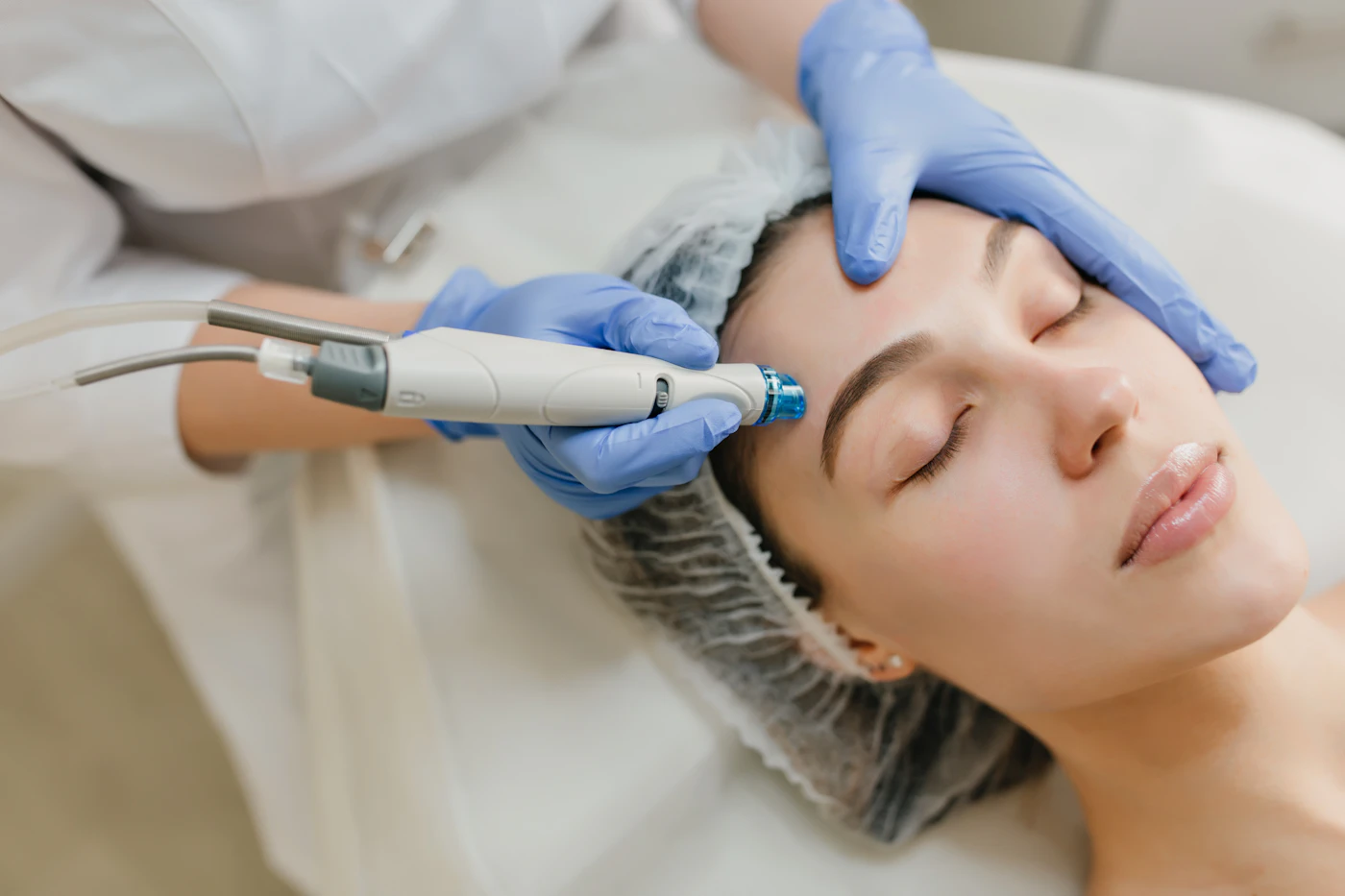
Post-treatment skincare in a dermatology setting
Recovery is straightforward for most patients. The changes that matter happen quietly over the following weeks.

Ultherapy is often described as a "no-downtime" treatment. That phrase is mostly true, and slightly misleading. Patients can return to normal activities the same day, but it helps to know what sensations and small visible changes to expect over the first week so they are not caught off guard. The published adverse event profile across Fitzpatrick III–VI patients is reassuring: in a 52-patient open-label trial, the three reported events (raised mild edema in two patients, moderately severe prolonged erythema with mild scabbing in one) all resolved by day 90 without sequelae[1]. This page covers the honest recovery timeline.

Hour 0Treatment endsMild flush · warmthDay 1–3Mild swellingMost subtle to othersWeek 1Sensitivity normalisesResume skincare routineWeek 4–6Subtle tighteningFirst visible changeWeek 8–12Peak resultCollagen + elastin matureDowntime band:Most patients: same-day to 3 daysResult builds (collagen + elastin)
Recovery timeline — the visible result is built quietly between weeks 4 and 12. Histological elastin neogenesis at day 90 is confirmed in published time-course studies.

Immediately after the session

As you sit up from the treatment chair, the skin will look mildly flushed and feel warm, similar to a strong workout or a long sauna session. Touching the cheeks may feel tender. This redness usually settles within one to four hours. Most patients leave the clinic looking presentable and head out for the rest of their day; some prefer to wear a hat and sunglasses for the trip home, more out of preference than necessity.

A small subset of patients see linear or grid-like marks at the treatment lines for an hour or two — these are normal and resolve without intervention. If concealer is needed for an evening event, it can be applied gently once the skin has cooled.

Days one to three

Mild swelling is the most common day-one finding, particularly along the jawline and submental zone. It is rarely dramatic; most patients look normal to colleagues but slightly puffy to themselves. Sleeping with the head slightly elevated and avoiding salty meals the night after treatment both help. Cool compresses applied for ten to fifteen minutes at a time can be used for comfort but are not required.

Some patients report a deep, dull tenderness when chewing or pressing on the cheek during this window. This is the deeper coagulation zones healing and is a normal part of the process. Over-the-counter analgesics are fine if needed; aspirin and other blood-thinning medications should be discussed with the clinician first, particularly within the first 48 hours.

Week one

Bruising is uncommon but possible, especially at the jawline and in patients on supplements with a blood-thinning effect (high-dose fish oil, ginkgo, vitamin E). Reported bruising rates in patients who received MFU-V combined with dermal fillers and/or botulinum toxin sit in the low single-digit percent range, consistent with the device's overall safety profile when delivered by trained operators[2]. When bruising occurs it usually resolves within seven to ten days. Skin sensitivity normalises by the end of the first week. Most patients resume facials, gentle exfoliation, and topical retinoids around day seven, after confirming with the clinic.

Weeks two to twelve — the result building

The visible improvement from MFU-V comes from new collagen and, as more recent histological work shows, new elastin. The body generates these in response to the small thermal coagulation points the device creates. Time-course studies show mature collagen and newly synthesised elastin at the treatment depth by day 90[3]. That is why patients typically notice a subtle tightening around the four to six-week mark and the peak result around eight to twelve weeks. A photograph taken in the same lighting at week zero and week twelve is the most reliable way to see the change; mirror impressions vary with mood, lighting, and time of day.

Skincare during recovery

The clinic's standard recommendation is conservative:

  • Use a gentle, fragrance-free cleanser morning and evening for the first week.
  • Apply a bland moisturiser as needed for comfort; barrier-repair formulations are useful if skin feels tight.
  • Apply broad-spectrum SPF 30 or higher daily — the most important single step, both for protecting the result and for general skin health.
  • Pause topical retinoids, alpha-hydroxy acids, and benzoyl peroxide for five to seven days, then resume as tolerated.
  • Avoid hot saunas, intense steam rooms, and very hot showers for 24–48 hours; warm bathing is fine.

When to contact the clinic

Most patients have nothing to call about. The situations that should prompt a message to the clinic are: persistent numbness or weakness in a specific facial muscle that lasts beyond a few days, spreading redness or warmth that develops 24 hours or more after treatment, asymmetric swelling that worsens rather than improves after day three, or any blistering or skin breakdown. These are uncommon with MFU-V in experienced hands; the clinic will assess by photograph or in person and advise accordingly.

For ongoing care and any follow-up bookings, you can reach the clinic's main consultation page to schedule a check-in or to arrange combination treatments once the MFU-V result has matured.

Risks and contraindications

Ultherapy® (MFU-V) is well tolerated when performed by a trained dermatologist, but it is not risk-free. Common transient effects include redness and warmth (resolves in hours), mild swelling at 1–3 days, and occasional bruising at the jawline. Rare adverse events include temporary numbness in a specific facial zone, transient weakness of a facial muscle, small areas of skin sensitivity, and — in patients with permanent dermal filler in the focal path — focal nodules or fat atrophy. In a 52-patient open-label trial across Fitzpatrick III–VI skin, the three reported adverse events resolved by day 90 without sequelae[1].

Absolute contraindications: pregnancy and breastfeeding, active infection in the treatment area, open wounds or recent surgical incisions in the zone, and significant immunosuppression. Relative contraindications discussed at consultation: keloid history, autoimmune skin disease, recent dermal fillers, and clinically indicated anticoagulation that cannot be safely paused.

This page is general guidance. The clinic will provide individualised aftercare instructions on the day of treatment that take precedence over anything written here.

References

  1. Harris MO, Sundaram HA. Safety of Microfocused Ultrasound With Visualization in Patients With Fitzpatrick Skin Phototypes III to VI. JAMA Facial Plast Surg. 2015;17(5):355-7. doi:10.1001/jamafacial.2015.0990 · PMID:26313402
  2. Fabi SG, Goldman MP, Mills DC, et al. Combining Microfocused Ultrasound With Botulinum Toxin and Temporary and Semi-Permanent Dermal Fillers: Safety and Current Use. Dermatol Surg. 2016;42 Suppl 2:S168-76. doi:10.1097/DSS.0000000000000751 · PMID:27128245
  3. Marquardt K, Hartmann C, Wegener F, et al. Microfocused Ultrasound With Visualization Induces Remodeling of Collagen and Elastin Within the Skin. J Cosmet Dermatol. 2024;24(1):e16638. doi:10.1111/jocd.16638 · PMID:39545626

Source attribution: clinical references retrieved from PubMed (US National Library of Medicine). Citations on this page are for educational reference; clinical decisions are made in consultation with a qualified dermatologist.

Medically reviewed by a Korean Board-Certified Dermatologist (AAD International Fellow · ASLMS member). Last reviewed 2026-06-08.