Ultherapy for the Jawline and Neck: Evidence and Assessment
The jawline is the contour along the lower jaw; the submental area is beneath the chin, and the neck is a separate region. MFU-V studies have assessed facial and neck laxity, including outcomes at 180 days. Whether a treatment plan fits these areas requires an assessment of anatomy and skin laxity.[2]
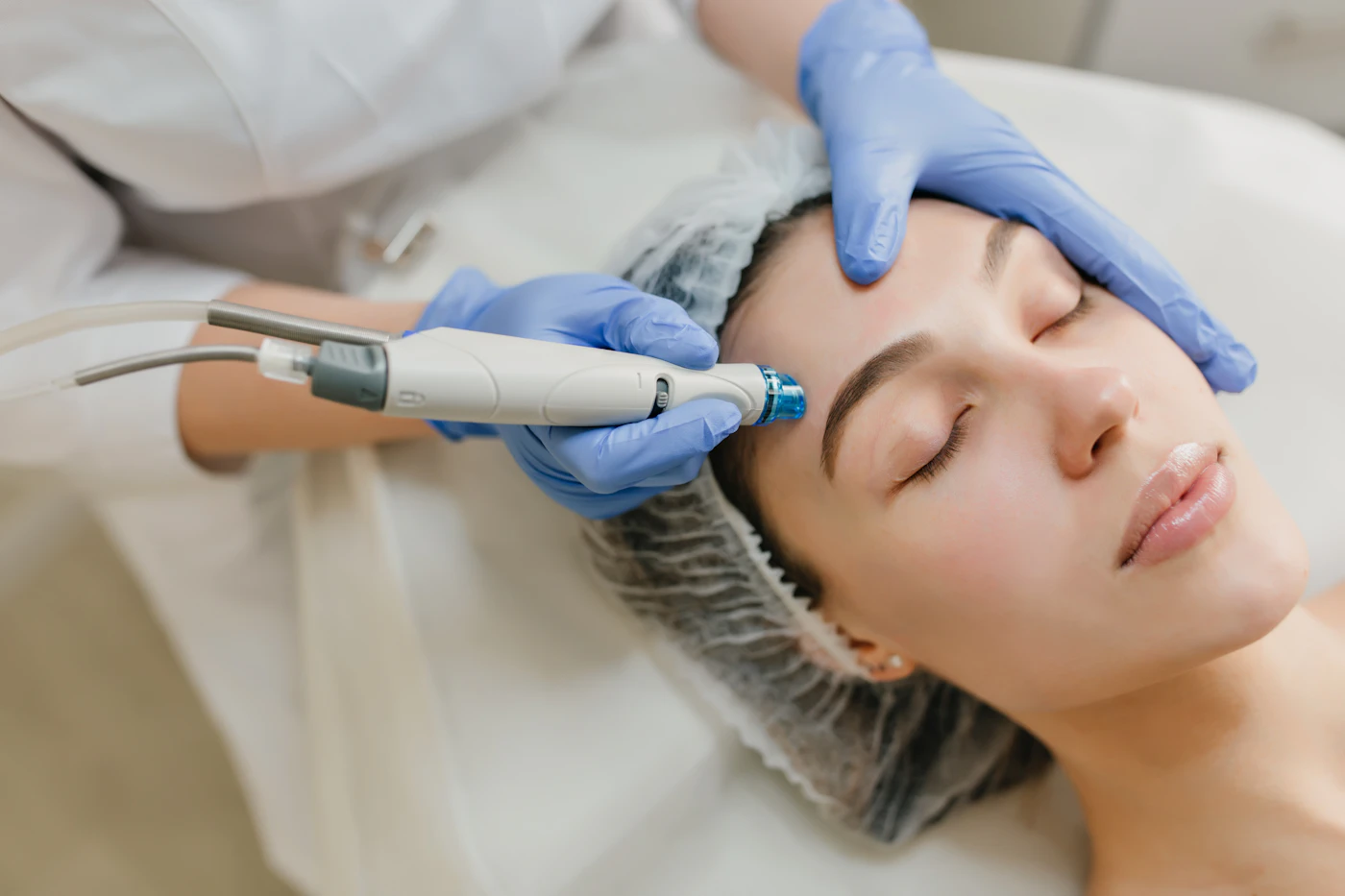
Anatomy and treatment depth
Ultherapy transducers have nominal focal depths of 1.5, 3.0 and 4.5 mm. A depth setting does not identify the same tissue layer in every person or treatment area. Ultrasound imaging helps assess tissue layers, contact and an appropriate depth.[4] US instructions for use
| Specification | What it means | What to assess |
|---|---|---|
| 1.5, 3.0, 4.5 mm | Nominal focal depths of the transducers | The tissue present at that depth in the proposed area |
| Ultrasound imaging | Visualization of dermal and subdermal tissue | Contact and appropriate depth, including avoiding bone |
| Anatomical area | Jawline, under-chin area and neck are distinct | The specific concern and treatment boundaries |
US indications and local assessment
The 2012 US clearance covers lifting lax submental and neck tissue. This historical decision is not a separate jawline-contouring indication or a statement of Korean authorization. Confirm local labeling for the exact device. FDA K121700 (2012)
What the evidence shows for the lower face and neck
The Fabi 2014 evaluation documented MFU-V improvement at 180 days[2]. A study of 19 women used two HIFU sessions and six low-fluence Q-switched Nd:YAG laser sessions for neck and chest concerns, with improved scores and 84% satisfaction at week 16[1]. These HIFU findings do not establish outcomes for an MFU-V combination.
How to assess before-and-after photographs
Individual assessment
Fabi’s review describes mild-to-moderate skin and soft-tissue laxity as a potential treatment setting. Severe laxity or marked platysmal bands warrants discussion of surgical options. A consultation should distinguish loose skin, fullness and muscle bands before setting expectations.[4]
To see where the transducer is placed, watch how Ultherapy is applied under the chin and on the neck.
candidates and contraindications
Risks and contraindications
Redness, swelling, tenderness, bruising and altered sensation can occur. Postmarketing reports also include muscle weakness, burns, nodules and fat or volume loss; their frequency is uncertain. Discuss prior fillers and implants before treatment. In a 52-patient open-label trial across Fitzpatrick III–VI skin, the three reported adverse events resolved by day 90 without sequelae[3].
The US instructions for use list open wounds or lesions, severe or cystic acne, and active or metallic implants in the treatment area as contraindications. Pregnancy, breastfeeding and anticoagulant use have not been evaluated; defer treatment during pregnancy or breastfeeding and review medications with the prescriber. Do not stop prescribed medication yourself. Avoid treating directly over an existing keloid; a history of abnormal scarring requires assessment. Korean treatment must follow the labeling for the exact device used.
References
- Nam JH, Choi YJ, Lim JY, Min JH, Kim WS. Synergistic effect of high-intensity focused ultrasound and low-fluence Q-switched Nd:YAG laser in the treatment of the aging neck and décolletage. Lasers Med Sci. 2017;32(1):109-116.
- Fabi SG, Goldman MP. Retrospective evaluation of micro-focused ultrasound for lifting and tightening the face and neck. Dermatol Surg. 2014;40(5):569-75.
- Harris MO, Sundaram HA. Safety of Microfocused Ultrasound With Visualization in Patients With Fitzpatrick Skin Phototypes III to VI. JAMA Facial Plast Surg. 2015;17(5):355-7.
- Fabi SG. Noninvasive skin tightening: focus on new ultrasound techniques. Clin Cosmet Investig Dermatol. 2015;8:47-52.
- Vachiramon V, Pavicic T, Casabona G, et al. Microfocused Ultrasound in Regenerative Aesthetics: A Narrative Review on Mechanisms of Action and Clinical Outcomes. J Cosmet Dermatol. 2024;24(2):e16658.
Medically reviewed by a Korean Board-Certified Dermatologist (AAD International Fellow · ASLMS member). Last reviewed 2026-06-27. Editorially updated 2026-10-18.